
Part of The Folder’s After You Sign series — see them all →
Funding & Assets
Personal Property: Jewelry, Collectibles, and the Things That Cause the Most Arguments
The house and the brokerage account usually come with clear instructions — a percentage, a name, something in writing. Grandma's ring, dad's watch, the china nobody's used in twenty years — those often don't. And that's exactly where families end up arguing.
Good to know
Questions, answered.
Why do the small things cause more conflict than the big things?
Because nobody wrote anything down. Money is easy to divide fairly; a specific ring or a specific painting isn't. Without instructions, everyone tends to remember a different version of what was promised, and there's no document to settle it. The dollar value is almost never the real issue — being overlooked is.
Is there an actual way to say who gets what, without rewriting my whole will?
Yes — it's called a personal property memorandum, and most people have never heard of it. It's a simple, separate list, referenced in your will or trust, that says who gets specific items of personal property. You can update it any time you want — add something, change your mind, cross someone off — without touching your actual will. Most states allow this and treat it as legally binding, but not all of them: New York doesn't recognize it as binding, and California allows it but caps what it can cover (no single item over $5,000, $25,000 total). Whether and how this works where you live is worth a specific check with your attorney.
Does it need to be signed, witnessed, or notarized to actually count?
Generally, yes to signing — nearly every state that recognizes this document at all requires your signature and a date, at minimum. Some states stop there; others require it to be witnessed or notarized to carry real legal weight. An unsigned list, a verbal promise, or a note tucked behind a picture frame is exactly the kind of thing that gets disputed and loses. For anything with real financial or sentimental weight, doing this correctly per your specific state's rules is what actually holds up if someone disagrees later — worth confirming directly with your attorney.
What can — and can't — go on this list?
It covers tangible personal property: jewelry, art, furniture, collectibles, memorabilia, and similar items. It generally can't cover real estate, cash, bank or investment accounts, or other intangible property. Vehicles are a gray area — some states allow them on this list, others don't, so that's worth confirming too.
Do I need to get everything appraised?
No. Appraisals matter most for items with real financial value — fine jewelry, art, meaningful collections — both for your own records and to head off disputes about relative value between beneficiaries. For most sentimental items, a photo and a short note does the job. Most appraisers won't even take on low-value items like everyday clothing.
What if I want to explain why someone's getting a particular item?
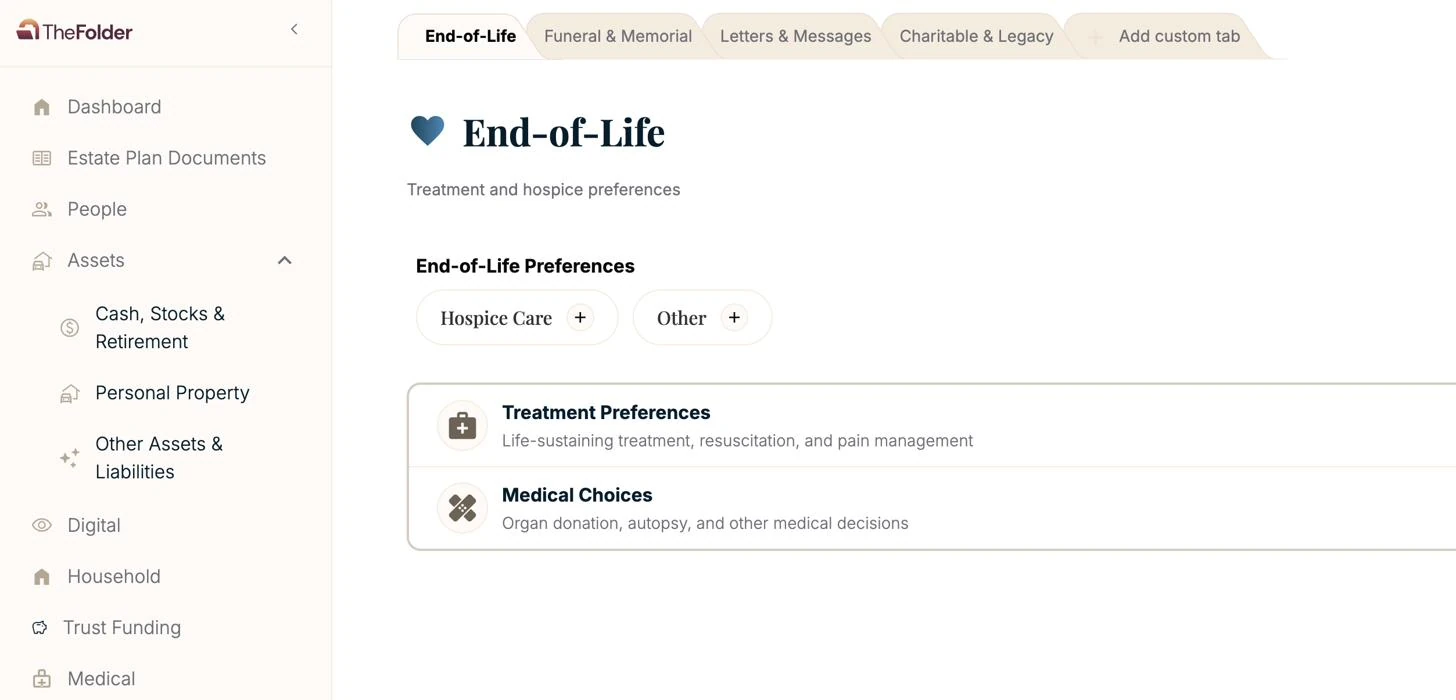
The formal memorandum doesn't need more than the item and the recipient — but the reasoning behind it matters just as much as the decision, and it deserves its own place. The Folder has one: under Final Wishes > Letters & Messages, you can write a note to a specific person, log your relationship to them, and even choose when it should be delivered. It's worth doing even for the item that seems too small to need an explanation — "This was your grandmother's, and I wanted you to have it because..." prevents far more hurt feelings than the item itself ever could.
Why does this need revisiting, not just written down once?
Because your reasoning changes as life does. The relationship that made a particular item feel right for someone five years ago might not fit anymore — a falling out, a new grandchild, a friendship that's changed shape. A personal property memorandum and the letters that explain it are a living record, not a one-time task — which is really the whole case for treating this as ongoing.
Where does this go in The Folder?
Under Assets > Personal Property > Valuables, log each meaningful item with a description, who it's meant for, any appraisal information, and where it's physically kept. Upload the appraisal or certificate directly if you have one. Worth being clear about what this does and doesn't cover: The Folder isn't a substitute for signing the memorandum correctly under your state's rules — that part still has to happen with your attorney, on paper. What The Folder is good for is keeping track of what the list actually says and making sure it doesn't just sit in a drawer nobody remembers to check.
Quick checklist
- Personal property memorandum created, if your state recognizes one, and referenced in your will or trust
- Signing, witnessing, and notarization requirements for your specific state confirmed with your attorney
- High-value items appraised
- Sentimental items documented with a photo and a note, even without a formal appraisal
- Valuables logged in The Folder with description, recipient, and location
- Reasoning behind meaningful gifts captured under Final Wishes > Letters & Messages
- List revisited periodically, not treated as finished
“The fights are rarely about the money. They're almost always about not being asked — and about a decision that was never revisited once it was made.”
Start today
Life changes.
Your plan should too.
Start with the plan you already have. The Folder helps you understand it, keep it current, and make sure your family knows what they’ll need when the time comes.
Free for 30 days
No credit card required.
Then $349/year, less than $1 a day. Billed annually.
✓ Everything in The Folder, included
✓ SOC 2 · bank-level encryption
✓ Invite the people you trust
Have a code from your firm?
Encrypted · never sold · you control access